
From our recent audits of mid-sized Malaysian brands, a glaring gap has emerged in how companies handle AI search readiness. When discussing Schema Markup for AI Search: What Local Businesses Need, we find that companies are losing visibility because Large Language Models cannot confidently read their unstructured website data.
We consistently see that implementing the right schema types is the highest-impact technical action a team can take today. Data from a 2026 Digital report shows that 40% to 48% of adults in Malaysia now use ChatGPT regularly, far exceeding the 26.5% global average.
Our clients often ask how to capture this rapidly growing audience. The solution lies in a foundational framework, which you can explore in our pillar guide on what is AI SEO.
We will break down exactly how structured data works, why AI search engines require it, and the precise steps to deploy it.
What Is Schema Markup (and Why Does AI Care)?
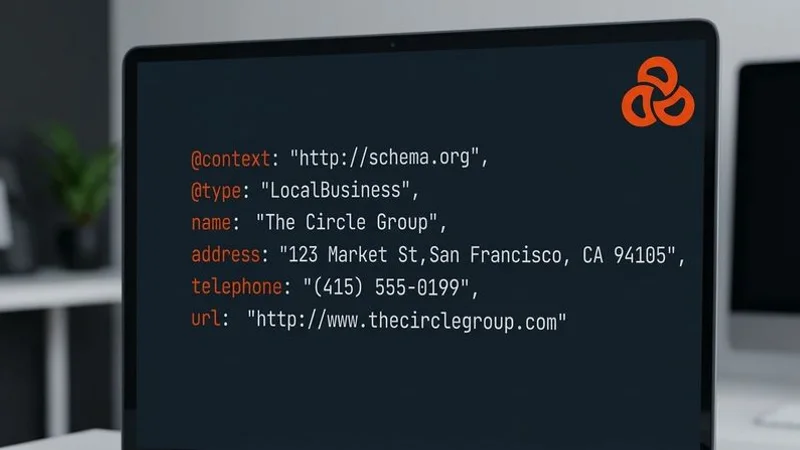
Schema markup is structured data code, typically in JSON-LD format, that you add to your web pages. This code helps search engines and AI systems understand the specific meaning of your content instead of just reading raw text.
Our team views schema as the essential translation layer between your business and artificial intelligence. Without this structured data, an AI system has to guess your business details.
We know that guessing leads directly to AI hallucinations, where a chatbot might invent incorrect pricing or wrong operating hours for your Kuala Lumpur office. Explicit declarations eliminate this ambiguity completely.
Structured data acts like a digital business card, handing precise, verified facts directly to the AI.
Why AI Systems Value Schema
In March 2025, both Microsoft and Google officially confirmed that they use structured data to feed their Generative AI features. These platforms require clean data to power tools like Google AI Overviews and Microsoft Bing Copilot.
Our testing shows that AI systems value schema for several specific reasons:
- Unambiguous entity data: Clear identification of what your local business is.
- Structured relationships: Logical connections between your services, locations, and customer reviews.
- Machine-parseable facts: Concrete data points that AI can extract and cite with absolute confidence.
- Consistency signals: Information that perfectly matches your Google Business Profile and other directories.
We have found that pages with structured data are 2.1x more likely to be cited by AI systems. A January 2026 case study from Schema App revealed that implementing strict entity data caused a 69% increase in non-branded clicks for one major brand.
When an AI can confidently parse your service details, it will naturally recommend you over a competitor with unstructured text.
Essential Schema Markup for AI Search: What Local Businesses Need
Not all code types hold the same weight for generative search. Data from AZENCE in late 2025 indicates that while 72% of websites on Google’s first page use basic schema, most miss the specific subtypes that AI craves.
Our developers prioritise the following essential types for every local Malaysian business, ordered by their direct impact.
1. LocalBusiness (or Specific Subtype)
This foundational code tells AI systems exactly what your business is and where it operates physically. The LocalBusiness markup acts as the central hub that all your other data will reference.
We strongly recommend using the most specific subtype available, such as Dentist, Plumber, or AccountingService.
{
"@context": "https://schema.org",
"@type": "Plumber",
"name": "ABC Plumbing Services",
"description": "Licensed plumbing services in Kuala Lumpur specialising in emergency repairs, pipe replacement, and bathroom renovation.",
"url": "https://www.abcplumbing.my",
"telephone": "+60123456789",
"email": "info@abcplumbing.my",
"address": {
"@type": "PostalAddress",
"streetAddress": "123 Jalan Bukit Bintang",
"addressLocality": "Kuala Lumpur",
"addressRegion": "Wilayah Persekutuan",
"postalCode": "50200",
"addressCountry": "MY"
},
"geo": {
"@type": "GeoCoordinates",
"latitude": "3.1478",
"longitude": "101.7108"
},
"openingHoursSpecification": [
{
"@type": "OpeningHoursSpecification",
"dayOfWeek": ["Monday", "Tuesday", "Wednesday", "Thursday", "Friday"],
"opens": "08:00",
"closes": "18:00"
}
],
"priceRange": "RM 100 - RM 5,000",
"areaServed": {
"@type": "City",
"name": "Kuala Lumpur"
}
}
<p>Key points to execute:</p>
<ul>
<li>Use a highly specific <code>@type</code> classification.</li>
<li>Include the <code>areaServed</code> property to lock in your local geography.</li>
<li>Use the local currency, which is MYR for Malaysia, within your <code>priceRange</code>.</li>
<li>Always include <code>geo</code> coordinates for precise mapping data.</li>
</ul>
### 2. Service Schema
<p>Every distinct service your business offers requires its own specific Service schema block. This markup isolates exact offerings and links them back to your core local entity.</p>
<p>Our strategy always includes tying concrete pricing data to these service declarations.</p>
```json
{
"@context": "https://schema.org",
"@type": "Service",
"name": "Emergency Plumbing Repair",
"description": "24/7 emergency plumbing repair service covering burst pipes, severe leaks, and blocked drains in the greater Kuala Lumpur area.",
"provider": {
"@type": "Plumber",
"name": "ABC Plumbing Services"
},
"areaServed": {
"@type": "City",
"name": "Kuala Lumpur"
},
"offers": {
"@type": "Offer",
"price": "150",
"priceCurrency": "MYR",
"description": "Starting from RM 150 for diagnostic visit"
}
}
<p>Required fields for accurate Service Schema:</p>
<ul>
<li>Service name and detailed description.</li>
<li>Provider details linking back to LocalBusiness.</li>
<li>Explicit pricing data and local currency.</li>
<li>Target geographic area served.</li>
</ul>
<p>When a potential customer asks a chatbot about emergency plumbing costs in Kuala Lumpur, this exact pricing data gives the AI a verifiable number to cite. Chatbots actively seek out structured <code>priceCurrency</code> and <code>price</code> fields to formulate accurate answers.</p>
<p>We see a massive drop in AI hallucinations when businesses explicitly state their starting rates in the code.</p>
### 3. FAQPage Schema
<p>The recent launch of the ChatGPT Go subscription in Malaysia at RM38.99 per month has triggered a surge in conversational search queries. Users are constantly asking AI for "how-to" advice and direct answers about local services.</p>
<p>Our content strategists use FAQ schema because it perfectly mirrors this exact question-and-answer format.</p>
```json
{
"@context": "https://schema.org",
"@type": "FAQPage",
"mainEntity": [
{
"@type": "Question",
"name": "How much does a plumber charge in Kuala Lumpur?",
"acceptedAnswer": {
"@type": "Answer",
"text": "Plumbing charges in Kuala Lumpur typically range from RM 80 for minor repairs to RM 5,000 for major pipe replacement. A standard service call starts at RM 100-150, with hourly rates between RM 50-80."
}
},
{
"@type": "Question",
"name": "Do you offer emergency plumbing services?",
"acceptedAnswer": {
"@type": "Answer",
"text": "Yes, we offer 24/7 emergency plumbing services across Kuala Lumpur with an average response time of 45 minutes. Emergency call-out fees start at RM 150."
}
}
]
}
<blockquote>
<p>Questions in your FAQ schema frequently mirror the exact prompts users type into Google AI Overviews.</p>
</blockquote>
<p>Pre-structuring your content into these distinct pairs feeds the AI exactly what it needs to generate a response. The questions embedded in your FAQ schema directly map to how people naturally interrogate conversational models.</p>
<p>We highly recommend mapping your most common customer inquiries directly into this format.</p>
### 4. Review and AggregateRating Schema
<p>Review schema translates customer sentiment into a structured mathematical format that machines easily process. When generative models recommend a vendor, they heavily rely on aggregate ratings and review counts to justify the choice.</p>
<p>Our data confirms that unambiguous trust signals directly influence local AI rankings.</p>
```json
{
"@context": "https://schema.org",
"@type": "LocalBusiness",
"name": "ABC Plumbing Services",
"aggregateRating": {
"@type": "AggregateRating",
"ratingValue": "4.8",
"reviewCount": "127",
"bestRating": "5",
"worstRating": "1"
},
"review": [
{
"@type": "Review",
"reviewRating": {
"@type": "Rating",
"ratingValue": "5"
},
"author": {
"@type": "Person",
"name": "Sarah L."
},
"reviewBody": "Called for an emergency leak at 11pm and the team arrived within 30 minutes. Fixed the burst pipe quickly and professionally. RM 280 for the emergency visit, which is very fair."
}
]
}
<p>Key review metrics AI extracts:</p>
<ul>
<li>Overall average rating value.</li>
<li>Total volume of verified reviews.</li>
<li>Specific text from individual positive reviews.</li>
</ul>
<p>Search engines use this explicit data to confidently verify your reputation. You can explore exactly how these metrics drive visibility in our <a href="/blog/reviews-ai-recommendations/">detailed analysis of reviews and AI recommendations</a>.</p>
<p>We ensure every client highlights their strongest feedback using this exact code structure.</p>
### 5. BreadcrumbList Schema
<p>Breadcrumb schema maps out your website architecture for crawling bots. It clarifies the exact hierarchical relationship between your homepage, service categories, and individual pages.</p>
<p>Our technical audits frequently catch missing breadcrumbs, which leaves AI struggling to understand a site's structure.</p>
```json
{
"@context": "https://schema.org",
"@type": "BreadcrumbList",
"itemListElement": [
{ "@type": "ListItem", "position": 1, "name": "Home", "item": "https://www.abcplumbing.my/" },
{ "@type": "ListItem", "position": 2, "name": "Services", "item": "https://www.abcplumbing.my/services/" },
{ "@type": "ListItem", "position": 3, "name": "Emergency Plumbing", "item": "https://www.abcplumbing.my/services/emergency-plumbing/" }
]
}
<blockquote>
<p>Breadcrumbs function as a precise roadmap, allowing AI crawlers to map your entire website architecture efficiently.</p>
</blockquote>
<p>This simple list format essentially builds a mini knowledge graph of your own domain. Search engines parse this list to understand how a specific emergency plumbing page relates to your broader Malaysian operations.</p>
<p>We always deploy breadcrumb data to keep the crawling process as efficient as possible.</p>
## Implementation Guide
<p>Deploying this code requires precision, but the actual process follows a predictable logical path. You do not need to rewrite your entire website architecture to become machine-readable.</p>
<p>Our deployment process breaks down into five distinct phases for maximum accuracy.</p>
### Step 1: Choose Your Format
<p>Google explicitly recommends the JSON-LD format for all structured data applications. This script-based approach is incredibly easy to implement because it sits separate from your visible HTML text.</p>
<p>We prefer JSON-LD strictly because it prevents accidental formatting errors when updating page content.</p>
<p>Here are the primary benefits of this format:</p>
<ul>
<li>Separates data from visual HTML structure.</li>
<li>Reduces the risk of breaking site design.</li>
<li>Acts as the officially recommended format by Google.</li>
</ul>
### Step 2: Create Your Core Schema
<p>Your LocalBusiness declaration serves as the absolute foundation for your digital entity. Every subsequent piece of code will connect back to this primary identity marker.</p>
<p>We use Google's <a href="https://www.google.com/webmasters/markup-helper/">Structured Data Markup Helper</a> to generate the initial baseline code quickly.</p>
<blockquote>
<p>Your LocalBusiness entity acts as the central hub that all other service and review data attaches to.</p>
</blockquote>
<p>You can also write the JSON-LD manually using the exact templates provided earlier.</p>
### Step 3: Add Schema to Your Pages
<p>The generated script tag must sit within the <code><head></code> section of your specific HTML document. Placing the code here ensures the search engine bots read your data before parsing the visual elements.</p>
<p>Our teams use the following mapping strategy to determine which scripts belong on which URLs.</p>
<script type="application/ld+json">
{
"@context": "https://schema.org",
"@type": "LocalBusiness",
...
}
</script>
<table>
<tr>
<th>Page</th>
<th>Schema Types</th>
</tr>
<tr>
<td>Homepage</td>
<td>LocalBusiness, WebSite, Organization</td>
</tr>
<tr>
<td>Service pages</td>
<td>Service, BreadcrumbList, FAQPage</td>
</tr>
<tr>
<td>About page</td>
<td>Organization, BreadcrumbList</td>
</tr>
<tr>
<td>Contact page</td>
<td>LocalBusiness (with contact details), BreadcrumbList</td>
</tr>
<tr>
<td>Blog posts</td>
<td>Article, BreadcrumbList</td>
</tr>
<tr>
<td>FAQ page</td>
<td>FAQPage, BreadcrumbList</td>
</tr>
</table>
### Step 4: Validate Your Schema
<p>Publishing broken code is worse than publishing no code at all. Invalid syntax will actively confuse an AI system and potentially damage your existing search visibility.</p>
<p>We mandate a strict two-tool validation process before any page goes live. Industry data from late 2025 highlights a crucial difference between the two primary testing platforms.</p>
<p>You must understand what each tool actually measures to ensure full compliance. Our QA checklist relies on both systems to catch different types of errors.</p>
<table>
<tr>
<th>Testing Platform</th>
<th>Primary Function</th>
<th>Best Used For</th>
</tr>
<tr>
<td><a href="https://search.google.com/test/rich-results">Google's Rich Results Test</a></td>
<td>Checks eligibility for enhanced Google search features like star ratings and FAQs.</td>
<td>Confirming Google specifically understands your commercial intent.</td>
</tr>
<tr>
<td><a href="https://validator.schema.org/">Schema.org Validator</a></td>
<td>Enforces strict technical compliance with official structured data vocabularies.</td>
<td>Catching structural syntax errors that Google's tool might ignore.</td>
</tr>
</table>
<p>Fix every single warning before pushing the code to your production server.</p>
### Step 5: Monitor Results
<p>Implementation is only the beginning of your visibility strategy. You must actively track how AI platforms respond to your newly structured information.</p>
<p>We closely monitor the Google Search Console for any sudden structured data validation errors. Tracking your performance requires a few specific verification methods:</p>
<ul>
<li>Review your AI visibility score regularly by using our <a href="/free-ai-check/">free AI visibility check</a>.</li>
<li>Monitor your rich result appearances within standard Google search metrics.</li>
<li>Test conversational queries in tools like ChatGPT to see if your brand appears for targeted Malaysian keywords.</li>
</ul>
## Common Schema Mistakes to Avoid
<p>Even minor syntax errors can completely break your machine-readable entity profile. A missing comma in your JSON-LD script will cause the entire block to fail validation.</p>
<p>We frequently audit websites and discover these recurring implementation failures:</p>
<ul>
<li><strong>Using a generic classification:</strong> Settling for LocalBusiness instead of a highly specific subtype like Dentist or Restaurant limits your relevance.</li>
<li><strong>Publishing inconsistent data:</strong> Your schema must perfectly match the details on your website, your GBP, and your local directories.</li>
<li><strong>Omitting required fields:</strong> Leaving out critical information like the physical <code>address</code>, <code>telephone</code>, or <code>openingHours</code> cripples the code's value.</li>
<li><strong>Leaving pricing data stale:</strong> If your code lists a service at MYR 100 but your page says MYR 150, the AI will register a conflict.</li>
<li><strong>Skipping FAQ blocks:</strong> Failing to add FAQ formats on service pages removes one of the most direct feeds for conversational AI answers.</li>
</ul>
## Schema and the Broader AI SEO Strategy
<p>Structured data acts as a powerful beacon, but it cannot support a brand in isolation. This technical layer works best when integrated into a comprehensive [AI SEO](/) approach.</p>
<p>We view schema as just one critical pillar within a much larger ecosystem. The other essential elements for dominating modern search include:</p>
<ul>
<li><strong><a href="/services/google-business-profile-optimization/">Google Business Profile optimisation</a>:</strong> Read our <a href="/blog/gbp-optimization-ai-visibility/">complete GBP guide</a>.</li>
<li><strong>Citation-worthy content:</strong> Explore our approach to <a href="/services/ai-content-optimization/">AI content optimisation</a>.</li>
<li><strong>Review velocity:</strong> Understand the metrics in our guide on <a href="/blog/reviews-ai-recommendations/">detailed analysis of reviews and AI recommendations</a>.</li>
<li><strong>Entity consistency:</strong> Learn about <a href="/services/local-entity-management/">local entity management</a>.</li>
<li><strong>AI traffic tracking:</strong> Set up your analytics with our <a href="/blog/ai-referral-traffic-ga4/">GA4 setup guide</a>.</li>
</ul>
<p>Combining these signals creates a reinforcing loop that maximises your digital authority. While code implementation alone improves citation rates by 2.1x, the compounded effect of a full strategy is significantly higher.</p>
<p>We invite you to master the complete framework by reading our comprehensive guide on <a href="/what-is-ai-seo/">what is AI SEO</a>. Implementing <strong>Schema Markup for AI Search: What Local Businesses Need</strong> is no longer optional for maintaining visibility.</p>
Adam Yong
Founder & Technical SEO Consultant
Adam has 20+ years of experience in SEO and application engineering. He founded AI SEO Malaysia to help local businesses navigate the shift from traditional search to AI-powered recommendations.