
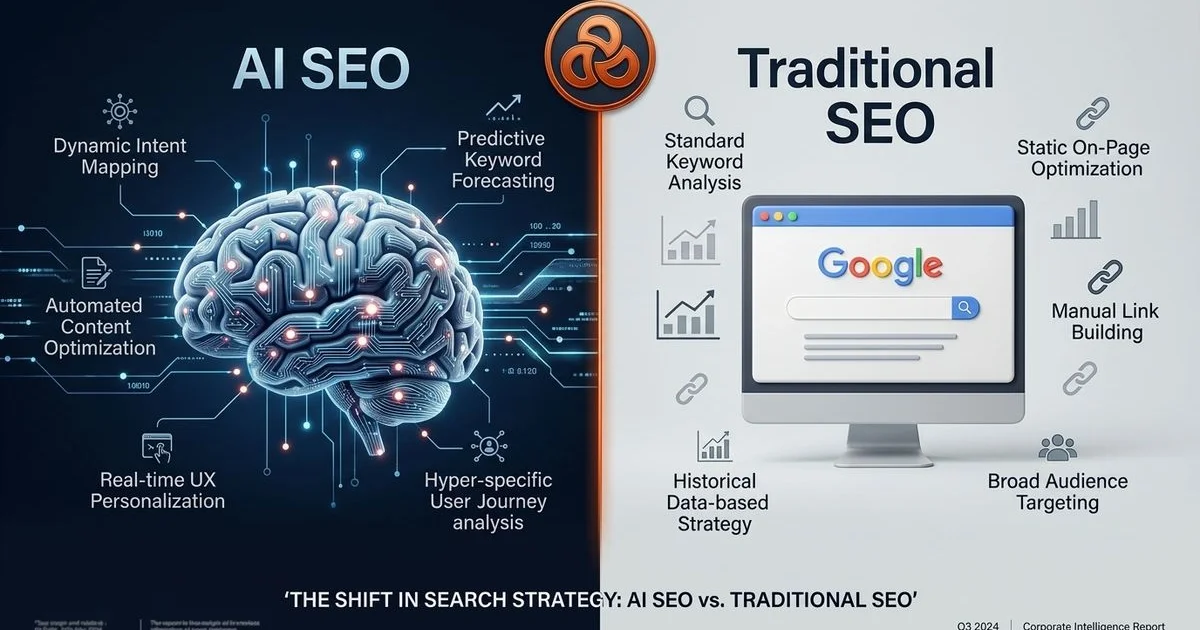
Our team has monitored the traffic shifts across multiple Google Analytics dashboards this past year. It is a reality many mid-size Malaysian companies face as search engines fundamentally change how they deliver information. Answering “AI SEO vs Traditional SEO: What Is the Difference?” is actively deciding which brands capture market share in 2026.
We know that businesses mastering both approaches will dominate the digital marketing landscape over the next five years. Traditional SEO optimises for search engine rankings. AI SEO optimises for AI recommendations instead.
Our analysis shows that relying solely on traditional SEO means optimising for a shrinking system. Google AI Overviews now appear in over 30 percent of search results. Meanwhile, ChatGPT handles over a billion queries every single week.
We will break down the exact data behind this shift and explore practical ways to adapt.
The differences are stark.
Let us look at what each system actually optimises for today.
What Traditional SEO Optimises For
Our specialists track core ranking signals constantly to adapt to these changes. Traditional SEO has been the standard since the late 1990s. The goal is simple: rank as high as possible in the ten blue links on a search engine results page (SERP).
- Backlinks: the number and quality of websites linking to your pages
- Keyword optimisation: matching search queries with on-page content
- Technical SEO: site speed, mobile-friendliness, crawlability
- Content length and freshness: longer, regularly updated content tends to rank better
- Domain authority: a composite score based on your backlink profile and domain age
We view traditional SEO fundamentally as a competition for position. You are trying to outrank competitors for specific keyword queries by accumulating more authority signals than they have. A 2025 study from GrowthSRC tracking over 200,000 keywords revealed that Position 1 organic click-through rates dropped by 32 percent.
Our data confirms that the top spot now only captures about 19 percent of clicks due to new search features. Malaysian agencies like Flow Digital point out that businesses relying on outdated keyword strategies are losing visibility to zero-click searches. You need a broader approach to stay relevant.
What AI SEO Optimises For
We focus on AI SEO, sometimes called Generative Engine Optimisation (GEO), to target modern recommendation systems. These include ChatGPT, Google AI Overviews, Perplexity, and other AI-powered search tools. The goal is not to rank first.
Our approach ensures these systems synthesise answers directly from your content. It is to be cited as a trusted source when AI generates its response. Recent 2025 data from Semrush reveals a fascinating insider tip.
We continuously monitor these insights, noting that ChatGPT cites web pages ranking in positions 21 or lower nearly 90 percent of the time. AI values citation-worthy facts over traditional page rank. Research from the KDD 2024 conference identified five evidence-backed techniques that improve AI visibility by 22 to 40 percent:
- Fluency optimisation: clear, well-structured prose that AI can easily parse and quote
- Citing credible sources: referencing statistics, studies, and authoritative data
- Quotation inclusion: expert quotes and testimonials that AI can extract
- Statistics and data: specific numbers AI can cite with confidence
- Unique, authoritative content: information AI cannot fabricate from other sources
Our team relies on dedicated GEO tracking tools like Otterly.ai and Evertune to measure this visibility. They help brands see exactly where they are mentioned in AI summaries. Read our complete guide on what is AI SEO for a deeper explanation of how this works.
AI SEO vs Traditional SEO: What Is the Difference Side by Side
We often use this exact breakdown to help clients realign their marketing budgets. Here is how the two approaches compare across the most important dimensions. The metrics show a clear divide in user intent and behaviour.
| Dimension | Traditional SEO | AI SEO |
|---|---|---|
| Target system | Google/Bing SERPs | ChatGPT, Google AI, Perplexity |
| Goal | Rank in top 10 | Get cited/recommended |
| Primary signals | Backlinks, keywords, domain authority | Entity clarity, citations, content quality |
| Content format | Keyword-optimised pages | Answer-first, citable content |
| Measurement | Rankings, organic traffic | AI visibility score, citation rate |
| Update cycle | Algorithm updates (quarterly) | Model retraining (continuous) |
| Local signals | Google Business Profile, NAP citations | GBP, reviews, community presence |
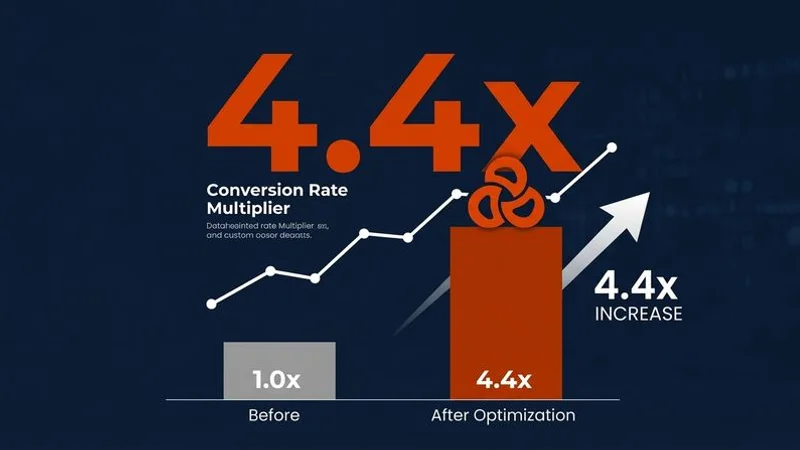
| Conversion rate | ~3.2% average | ~14.2% average (4.4x higher) |
| Traffic Quality | Standard bounce rates | 27% lower bounce rate (2026 data) |
Our analysis shows that this 4.4x improvement makes perfect sense. According to industry data, AI referral traffic converts at approximately 14.2 percent compared to 3.2 percent for traditional organic traffic. When an AI recommends your business by name, the user arrives with significantly higher intent and trust.
We track these metrics closely, and Vertu’s 2026 marketing report also found that AI-referred visitors have a 27 percent lower bounce rate. Notice the striking difference in conversion rates. These numbers reflect a fundamental shift in search reality.
Why Traditional SEO Alone Is No Longer Enough
Our strategists have identified three critical factors driving this change. Three major shifts are making traditional SEO insufficient on its own. The landscape has evolved rapidly over the past twelve months.
1. Zero-Click Searches Are Growing
We warn clients that depending entirely on ranking in the blue links guarantees a traffic decline. Google AI Overviews answer questions directly in the search results. Users get what they need without clicking through to any website.
Our analysis of Google AI Overview impact on Malaysian businesses shows the damage to informational queries. Recent 2025 studies indicate that roughly 60 percent of informational searches now end without a single click. Local e-commerce and B2B brands must adapt their content to survive this zero-click reality.
2. AI Recommendations Drive Higher-Quality Leads
We consider these high-intent users the most valuable segment in digital marketing today. When ChatGPT recommends a specific AI SEO service in Kuala Lumpur, that is a fundamentally different lead. The AI has pre-qualified your business as the best option.
Our data proves this is why the 14.2 percent conversion rate exists. These are warm referrals instead of cold clicks. These “survivor” visitors skip the traditional trust-building phase entirely because they have already read the background information.
3. Entity Understanding Matters More Than Keywords
Our technical audits frequently uncover inconsistent entity data across the web. Traditional SEO treats your website as a collection of pages optimised for keywords. AI systems treat your business as an entity, which is a real-world thing with attributes, relationships, and a reputation.
We use local entity management to ensure every directory, map, and listing says the exact same thing. If your name, address, or service descriptions vary, AI systems lose confidence and will not recommend you. This includes maintaining perfect consistency on platforms heavily used by AI, like Apple Maps, Bing Places, and local Malaysian directories such as the Yellow Pages.
How AI SEO and Traditional SEO Work Together
Our methodology leverages existing assets to feed both systems simultaneously. The good news is that you do not need to abandon traditional SEO entirely. The best strategy combines both approaches for maximum visibility.
We know that these two disciplines complement each other perfectly. Here is how they interact: Technical improvements benefit both systems equally.
- Technical SEO: fast, well-structured sites are easier for search engines and AI bots like GPTBot to crawl.
- Schema markup: improves traditional rankings while providing clear entity data for AI; learn more about schema markup for AI search.
- Quality content: ranks well in traditional search and provides the deep factual density AI needs to cite you.
- Google Business Profile: drives local SEO and feeds direct data into AI models; see our GBP optimisation guide.
- Reviews: boost local rankings and serve as the ultimate trust signal for AI recommendations.
Our most successful clients use traditional SEO to build site authority, which then makes AI models trust their content more. Traditional SEO emphasises backlinks and keyword density. AI SEO prioritises entity clarity, content quality, and citation-worthy data.
We see this dual approach as the best way to secure your traffic against sudden algorithmic shifts. You are essentially building a single digital footprint that serves two different masters. This balance ensures long-term stability.
What Should Malaysian Businesses Do Now?
Our local market experts recommend focusing on high-leverage actions first. If you are a Malaysian business invested in traditional SEO, you are not starting from zero. Many of your existing assets can be updated for AI with targeted improvements.
We have outlined a practical starting point for 2026. Audit your digital presence thoroughly. Follow these essential steps:
- Audit your AI visibility: find out exactly how AI currently sees your business with a free AI visibility check.
- Optimise your Google Business Profile: this is the single most important action for local AI visibility in Malaysia.
- Add entity-clarifying content: publish pricing guides, service area pages, and FAQ sections using Organization Schema that AI can easily cite.
- Track AI referral traffic: set up your GA4 dashboard to monitor AI-driven visits.
- Build review velocity: reviews are the number one off-site signal for AI recommendations, so gather them consistently.
We advise answering common customer questions on platforms like Quora or local forums, as AI frequently uses these for source material. The businesses that act now will have a significant advantage. AI visibility compounds over time.
Our team stresses that the window to establish your entity as a trusted source is closing quickly as competition increases. You must proactively claim your share of the AI recommendation space. Start treating your brand as a comprehensive digital entity today.
The Bottom Line
We know both matter heavily for a balanced marketing strategy. Traditional SEO gets you found in search results. AI SEO gets you recommended by AI.
Our data confirms that businesses investing in Generative Engine Optimisation today will capture disproportionate value tomorrow. The trajectory for the future is incredibly clear right now. AI-powered search is growing much faster than traditional search interfaces.
We highly recommend starting with our complete guide to AI SEO to understand exactly where your business stands. You cannot afford to ignore this fundamental shift in user behaviour. Answering “AI SEO vs Traditional SEO: What Is the Difference?” is the first step toward securing your brand’s future visibility.
We invite you to check your current AI visibility to see your baseline. Do not wait for your competitors to take the lead. The time to optimise is now.
Adam Yong
Founder & Technical SEO Consultant
Adam has 20+ years of experience in SEO and application engineering. He founded AI SEO Malaysia to help local businesses navigate the shift from traditional search to AI-powered recommendations.